
CybertronIT Blog
Deprecated: Using ${var} in strings is deprecated, use {$var} instead in /home/cybertronmsp/public_html/administrator/components/com_easyblog/includes/stylesheet/compilers/lessc.php on line 1343
Deprecated: Using ${var} in strings is deprecated, use {$var} instead in /home/cybertronmsp/public_html/administrator/components/com_easyblog/includes/stylesheet/compilers/lessc.php on line 1689
Deprecated: Using ${var} in strings is deprecated, use {$var} instead in /home/cybertronmsp/public_html/administrator/components/com_easyblog/includes/stylesheet/compilers/lessc.php on line 1689
Deprecated: Using ${var} in strings is deprecated, use {$var} instead in /home/cybertronmsp/public_html/administrator/components/com_easyblog/includes/stylesheet/compilers/lessc.php on line 1343
Deprecated: Using ${var} in strings is deprecated, use {$var} instead in /home/cybertronmsp/public_html/administrator/components/com_easyblog/includes/stylesheet/compilers/lessc.php on line 1689
Deprecated: Using ${var} in strings is deprecated, use {$var} instead in /home/cybertronmsp/public_html/administrator/components/com_easyblog/includes/stylesheet/compilers/lessc.php on line 1689
Cybertron Blog
Cybertron has been serving the Wichita area since 1997, providing IT Support such as technical helpdesk support, computer support, and consulting to small and medium-sized businesses.
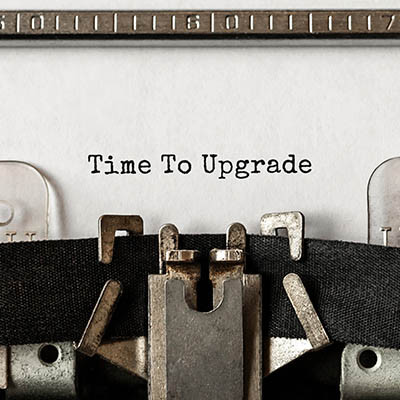
Why 'If It Ain't Broke' Is Dangerous Advice for IT

You have heard "if it ain't broke, don't fix it," and for a lot of things that is fine advice. For IT, it can be the expensive kind of wrong. Technology that still turns on every morning can quietly be one of the biggest risks in your business, because "still working" and "still safe to rely on" are not the same thing. Here is why holding onto old systems too long catches up with you.
Old does not mean fine
Any aging system, hardware or software, eventually becomes a legacy system, and legacy systems hold you back. They do not play well with newer tools, they slow your team down, and they tend to be riddled with security gaps that never get closed. The fact that it boots up does not mean it is doing you any favors.
When unsupported is the real "broke"
Here is the part people miss. The day a vendor stops supporting a product, it stops getting security patches, even though it runs exactly as before. From that moment, every newly discovered flaw stays open forever, and attackers know it. Unsupported is its own kind of broken, just one you cannot see until someone exploits it.
Technical debt compounds
Every delayed upgrade adds to what the industry calls technical debt, the pile of patched-over, propped-up, out-of-date pieces holding your operation together. Like any debt, it accrues interest. The longer you wait, the more tangled and expensive the eventual fix becomes, and the more likely it gets forced on you at the worst possible moment by a failure or a breach.
The fix is a plan, not a panic
The answer is not to rip everything out. It is a roadmap. Knowing what you run, how old it is, when each piece falls out of support, and replacing it on your schedule instead of in an emergency. Because we build hardware and run our own systems, we plan replacements around what the work actually needs and what each option costs over its life, not around a sales cycle. Some of it belongs on newer on-prem gear, some in the cloud. The point is choosing on purpose.
Old technology that still works can be the quiet liability that costs you most. The businesses that stay ahead replace it deliberately, before it forces their hand.
Book a call and we will map what you are running and where the real risks are hiding.

© 2026 CybertronIT. All rights reserved.Privacy Policy · Sitemap
Comments