
Newsletter Content
Cybertron Blog
Cybertron has been serving the Wichita area since 1997, providing IT Support such as technical helpdesk support, computer support, and consulting to small and medium-sized businesses.


There are two kinds of digital transformation. One turns a business into something faster and sharper. The other turns it into a ghost ship, perfectly automated, technically efficient, and stripped of anything human. Plenty of companies are racing to replace their support staff with AI agents and bragging about it, but a lot of them are quietly building a wall between themselves and their customers. Automating everything does save money. It also chips away at the one thing AI cannot fake, which is trust.
0 Comments

For years the patching rhythm was simple. A vendor released fixes, you applied them on a monthly cycle, and that was good enough. It is not anymore. Attackers now use AI to take a brand-new patch apart and build a working exploit in hours instead of weeks, which means the gap between a fix being released and your systems actually having it is the window they walk through. A once-a-month patch routine is starting to look less like diligence and more like an open door.

Every business runs on technology now, whether you are a creative agency, a law firm, or a retailer. The moment a machine throws up the blue screen or a server quietly falls over, the clock starts running against your revenue. That is when remote IT support stops being a convenience and becomes the thing that keeps your day from falling apart.
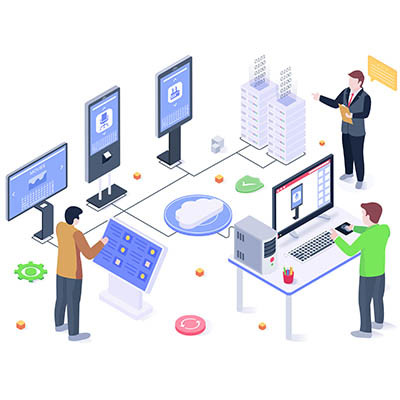
Take a walk through your office and look at the screens on the walls. If they are showing a generic weather widget, a Happy Monday slide that has been up for three weeks, or a No Signal box, you do not have a technology investment. You have an expensive screensaver. A lot of businesses put screens up because the lobby looked bare or someone suggested it, and then nobody gives them another thought. Done right, those screens should be doing real work.

Most businesses have one. That crusty, critical application the whole operation depends on, sitting on an old platform the vendor abandoned years ago. You cannot patch it, and you cannot rip it out overnight, so it sits there as a blinking security hole in the middle of your network. The good news is you do not have to replace it tomorrow to make it safe. You contain it. Here is how.

Cyberthreats are not occasional events anymore. They are constant, automated, and often sophisticated, which means a business that only reacts to attacks lives in permanent damage control. Waiting until something breaks to think about security is the most expensive plan there is. Getting ahead of it is the only approach that actually holds. Here is what waiting really costs, and what getting ahead looks like.

The scariest breaches are the quiet ones. An attacker phishes one employee's username and password, logs in, and walks straight into your network with no alarms going off, because as far as the system can tell, it is that employee. The single highest-impact fix for this is multi-factor authentication. Turning it on does more to lower your risk, for less money and effort, than almost anything else you can do. Here is how to roll it out, from good to best.
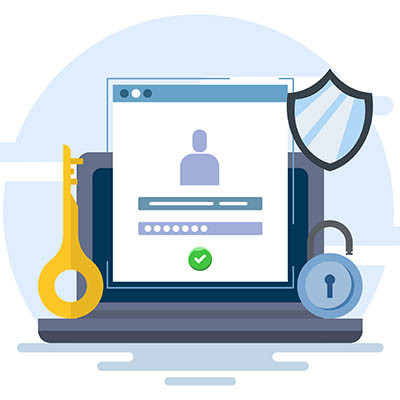
Passwords are still the front door to most of your business data, and a weak one undoes a lot of other protection. The trouble is that people make passwords convenient for themselves, which usually means convenient for attackers too. Here is what actually makes a password strong, and how to build ones you can live with.

Technology runs your business, so the choices you make about it matter. One of the most expensive mistakes is staying attached to a system because of what you already put into it, long after it stopped serving you. That instinct has a name, the sunk cost fallacy, and it quietly costs companies a lot. Here is how it works and how to decide better.

The most common complaint about generative AI is that it hallucinates, meaning it makes things up and states them with total confidence. That makes it risky for work where being wrong has consequences. You cannot eliminate the problem, but you can cut it down a lot with how you prompt. Here are a few habits that produce more reliable output.

From the old Nigerian prince scam to a polished fake invoice, phishing email is a constant threat to every business. The cost is not just a little money. One successful phishing attack can shut down operations, expose sensitive data, and in the worst cases take a company down. The good news is that most phishing has tells. Here is how to spot them.

Forget the old picture of a hacker, a lone kid in a hoodie breaking in for the thrill. That image is dead. Cybercrime is a sophisticated global industry now, and by one widely cited estimate from Cybersecurity Ventures it costs the world around 10.5 trillion dollars a year as of 2025. Understanding how that industry actually works is the first step to defending against it.

Passwords have been the front door to our digital lives for decades, and they have always been the weak point. People reuse them, choose easy ones, and get tricked into handing them over. A better approach is finally going mainstream, and it is called the passkey. Here is what passkeys are, why they are safer, and how to start using them.

Attachments are part of daily work, and they are also one of the easiest ways for malware to get onto your computer and your network. The danger is the reflex, that quick click before you have really looked. One careless tap can turn into a serious problem for you and the whole company. Here is a short checklist for deciding whether an attachment is safe and how to open it without taking a risk.

The mindset that builds a business is a specific one. You learn to do everything yourself, distrust easy answers, stretch every dollar, and figure it out as you go. That scrappiness got you here. With your technology, though, the same instincts can quietly work against you. Here is how, and what to do instead.

Downtime is not just an annoyance. It is lost revenue, stalled work, and customers who go elsewhere. Failover is one of the main ways serious operations avoid it. If you have ever wondered how big websites and services stay up even when something breaks behind the scenes, failover is a big part of the answer. Here is what it is and why it matters for your business.

Disruptions hit every business eventually, a natural disaster, a cyberattack, a key system going down, a vendor failing. A business continuity plan is how you keep operating through one instead of scrambling. It is not paperwork for its own sake, it is the difference between a bad week and a closed business. Here are the dos and don'ts of building one that actually works.

Every business loses time and money to inefficiency, and a lot of it is invisible until you go looking. The good news is that technology is good at finding and fixing exactly this kind of waste. Here are four types of tools that help you spot where time and money leak out, and plug the holes.

AI is a real tool that smart businesses are already putting to work, but plenty of companies stall out somewhere between the hype and an actual result. The difference is usually approach, not technology. Here are five tips for integrating AI in a way that pays off instead of fizzling.

Cloud computing has changed how teams work together, especially when they are not in the same room. By putting documents, projects, and communication on a shared, accessible platform, the cloud removes a lot of the friction that used to slow collaboration down. Tools like Microsoft 365 and Google Workspace are built around this. Here are four ways the cloud makes teamwork easier.

© 2026 CybertronIT. All rights reserved.Privacy Policy · Sitemap