
CybertronIT Blog
Cybertron Blog
Cybertron has been serving the Wichita area since 1997, providing IT Support such as technical helpdesk support, computer support, and consulting to small and medium-sized businesses.


In June 2025 a headline went around that should have stopped anyone cold: 16 billion passwords leaked, with a b, covering social media, VPNs, corporate tools, and just about every online service you can name. The number got repeated everywhere, usually with the phrase largest breach in history attached. It is a great scary story. It is also not quite what happened. The real version matters, because the wrong takeaway leaves you focused on the wrong threat.
Was It Really 16 Billion?
Here is what actually occurred. Researchers at Cybernews found roughly 30 exposed datasets holding about 16 billion login records in total. The catch is that this was not one giant new break-in. It was a pile of credentials gathered over time, mostly by infostealer malware that quietly harvests logins off infected computers, mixed in with data from older breaches. There is heavy overlap and duplication, so the same login can be counted many times. So 16 billion unique brand-new passwords? No. 16 billion records swept together from countless smaller thefts? Closer to it.
Why the Fact-Twisting Is Its Own Problem
You might think a scarier headline is fine if it gets people to pay attention. It backfires. When the number turns out to be inflated, people decide the whole thing was hype and tune out the next warning, including the real ones. And a one-time mega-breach framing points you at the wrong fix. This was not a single event you wait out. It is a steady drip of credential theft happening every week, which calls for habits, not a panic.
What Exposed Credentials Actually Cost a Business
Whatever the headline number, the danger is real. One working username and password can hand an attacker the keys. That leads to drained accounts and fraud, the reputational hit of telling customers their data leaked, downtime while you lock everything back down, legal and compliance exposure if regulated data was involved, and real harm to the customers whose information you were trusted to hold. The credential is small. The blast radius is not.
How to Actually Protect Your Business
Because this is a steady threat rather than a single event, the defense is steady too. Use multifactor authentication everywhere it is offered, so a stolen password alone is not enough to get in. Stop reusing passwords across accounts, and use a password manager so unique ones are realistic. Watch for credentials of yours showing up in known leaks so you can change them before they are used. And keep machines clean and patched, because infostealer malware is how most of these credentials get grabbed in the first place.
We handle exactly this for businesses as part of managed cybersecurity: enforcing multifactor, monitoring for leaked credentials, and keeping the malware that steals them off your systems. If you are not sure how many of your logins are already floating around out there, book a call and we will help you find out and lock things down.
0 Comments
There are a lot of technology tips worth following, but if we could give a business just one, it would be this: take data security seriously. A breach, a ransomware attack, or a lost laptop can do real financial damage, and most of that risk is closed by a handful of fundamentals. Here are the ones that matter most.
You lock the front door, set the alarm, and keep important papers in a secure cabinet. You do all that to protect your physical assets. Your digital assets deserve the same, and that starts with written rules. Security policies turn good intentions into clear expectations everyone follows, plus a plan to fall back on when something goes wrong. Here are five every business should have.
Passwords are not as strong as you would hope. They get guessed, stolen in breaches, and phished out of well-meaning employees. Multi-factor authentication is the layer that makes a stolen password far less useful, and it is one of the highest-value security moves a business can make. But not every kind of MFA is equally strong. Here is how it works, which types to choose, and how to roll it out.
Passwords have been the front door to our digital lives for decades, and they have always been the weak point. People reuse them, choose easy ones, and get tricked into handing them over. A better approach is finally going mainstream, and it is called the passkey. Here is what passkeys are, why they are safer, and how to start using them.
People reuse passwords because remembering a dozen of them is a pain. The problem is that when any one of those accounts is caught in a data breach, the stolen login can end up for sale on the dark web, and from there it becomes a key someone tries against your business. The dark web sounds like a horror story, but once you understand it, it is manageable. Here is what it is and how to stay ahead of it.
The October 2025 theft of the French crown jewels from the Louvre, around 88 million euros gone in minutes, grabbed headlines for the sheer nerve of it. The more useful story is what came out afterward. By multiple public reports, the museum had been warned for years about security basics it never fixed. The lesson is not really about museums. It is about how often the simple stuff gets ignored until it costs everything.
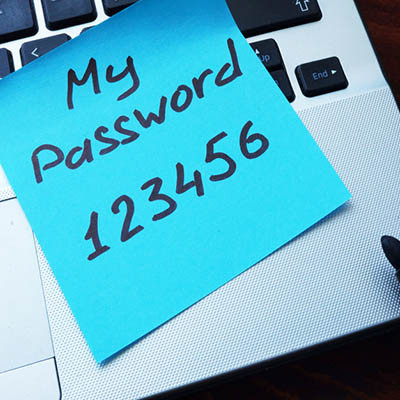
How many of your employees keep company passwords on sticky notes stuck to their monitors? It looks harmless, but anyone walking through the office can read them, including people who should not. Worse, the sticky note is a symptom of a deeper problem in how your business handles passwords. Here is why it happens and the system that actually fixes it.
Passwords are still the front door to most of your business data, and a weak one undoes a lot of other protection. The trouble is that people make passwords convenient for themselves, which usually means convenient for attackers too. Here is what actually makes a password strong, and how to build ones you can live with.
You have heard a decade of password advice. Most of it has not aged well. Automated tools now crack even nasty-looking complex passwords without much trouble, so the old playbook needs a rethink. The fix is the oldest advice there is, and it still works best. Make it longer. Here is why complexity is overrated and how to build a password that actually holds up.
The complexity myth needs to die
Complexity helps a little, but it is no substitute for length. A password like P@ssw0rd1 looks tough and is not. Attackers run dictionary attacks and pattern masks that hunt for exactly those common letter-for-symbol swaps, so the cleverness buys you almost nothing. The real problem is that complex passwords tend to be short, eight to ten characters, which means a small number of combinations. Just requiring more than eight characters increases your security dramatically, without anyone working harder.
Length is where the strength lives
Security people call the thing that makes a password strong entropy, which is really just randomness plus length. Every extra character makes a password far harder to crack. A long password built from simple words beats a short one stuffed with symbols. If an eight-character complex password is a good padlock on a flimsy door, a long one is a good padlock on a vault. Length is what turns the math against the attacker.
Use a passphrase
Here is the move. String together a few unrelated words, and add a symbol or number if a site demands it. Passphrases are the current go-to because they work with human memory instead of against it. A run of random words is easy to remember precisely because it is absurd to picture. And four words usually lands you past 20 characters. That solves two problems at once, your password becomes effectively uncrackable and people stop forgetting it.
If your team is struggling to move to stronger password habits, we make it painless. Book a call and we will help your staff lock things down without the headaches.

© 2026 CybertronIT. All rights reserved.Privacy Policy · Sitemap