
Newsletter Content
Cybertron Blog
Cybertron has been serving the Wichita area since 1997, providing IT Support such as technical helpdesk support, computer support, and consulting to small and medium-sized businesses.


You are mid-presentation and your screen freezes, or your CRM goes down during your busiest sales hour. The first instinct is to panic, hit every button, and call everyone at once. It is understandable, but it usually makes the problem worse. A calm, measured response almost always resolves an IT issue faster and cheaper than a frantic one. Here is why, and how to keep your head when something breaks.
0 Comments

A cluttered workspace tends to make for a cluttered mind. Whether you work from home or in an office, keeping your desk organized has a real effect on focus, stress, and even creativity. It is not about appearances. It is about an environment where you can actually do your best work. Here are five simple habits that keep a workspace working for you.
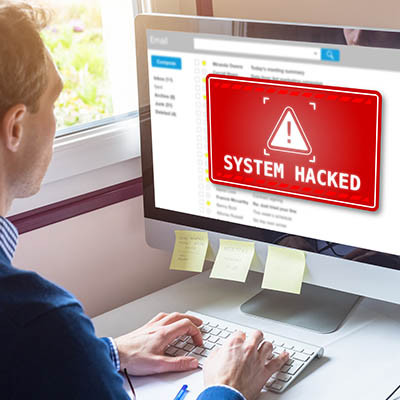
When people picture a cyberattack, they think of a ransom demand. The ransom is often the smallest part. The real bill includes downtime, investigation, legal fallout, lost customers, and damage that lingers for years. By IBM's 2025 Cost of a Data Breach report, the global average breach now costs 4.44 million dollars, and in the United States the average hit a record 10.22 million. Here is where all that money actually goes.
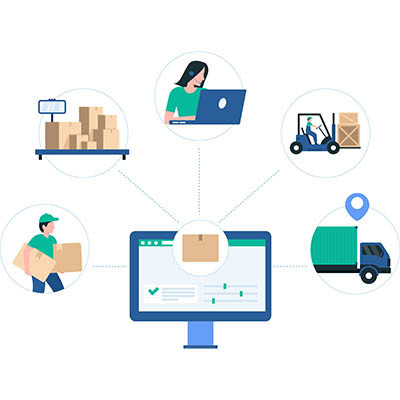
The daily grind of running a business can feel relentless. Overflowing inboxes, endless task lists, information scattered across a dozen apps, and the constant switching between them. None of it is the actual work, and all of it eats the day. The good news is that most of this drain is fixable with the right setup. Here is how to claw back the time the small stuff steals.

Think of a backup as insurance for everything your business runs on. You hope you never need it. The day you do, it is the only thing standing between a bad morning and a closed company. Most outfits think they have backups covered until they try to actually restore. A real system has three parts, and missing any one of them is how you find out the hard way.
The Three Parts of a Backup You Can Trust
These are not buzzwords. They are the difference between a backup that saves you and a file that was quietly failing for months.
Copies Made Often, and Made Right
A backup from three weeks ago means you lose three weeks of work. The schedule has to match how fast your data changes. For most businesses that means daily at a minimum, and far more often for the systems you cannot run without. The widely used standard here is 3-2-1: three copies of your data, on two different kinds of storage, with one copy kept off-site. CISA recommends the same approach. It sounds simple. Most companies that get hit find they were missing the off-site copy.
Storage That Holds Up Under Attack
Where the copies live matters as much as having them. Ransomware now hunts for backups first, because an attacker who encrypts your backup owns the negotiation. That is why one copy needs to be off-site and, ideally, immutable, meaning it cannot be changed or deleted once written. Whether that copy sits in the cloud or on hardware you control is a real decision, not a default. Cloud is convenient and off-site by nature. On-premises gives you control, speed of restore, and a clear answer for regulated data that is not allowed to leave your walls. For a lot of businesses the right answer is both, and choosing deliberately beats letting a vendor choose for you.
A Recovery Plan You Have Tested
A backup you have never restored is a guess. The plan is the part most people skip, and it is the part that decides how long you are down. How fast can you get the critical systems back? Who does what while the clock runs? Where do you restore to if the building itself is the problem? You answer those questions before the emergency by running a real test restore, not during it.
Where to Start
If you cannot say with confidence that your backups run on schedule, sit somewhere safe from ransomware, and have actually been restored, then you do not have a backup system yet. You have a hope.
We design and run backup and recovery for businesses that cannot afford downtime, including the on-prem, cloud, or hybrid call about where your copies should live. We also build and run the hardware behind on-site backups ourselves, so the advice comes from people who operate it, not just resell it. If you are not sure your backups would hold up, book a call and we will pressure-test what you have.

Time is not just money. It is the whole vault. You can buy more tools, hire more people, and add more software, but nobody sells you more hours. So the question worth asking is how to get more out of the ones you have. One of the simplest answers is a method named after a tomato.
What Is a Pomodoro
The Pomodoro Technique was created by Francesco Cirillo in the late 1980s, back when he was a university student trying to beat his own distraction. He grabbed a kitchen timer shaped like a tomato, pomodoro in Italian, and committed to one focused stretch of work before he let himself stop. That tomato timer gave the method its name. The idea stuck because it works.
How It Works
The whole system fits in a sentence. You pick one task, set a timer for 25 minutes, and work on nothing else until it rings. Then you take a five-minute break. Each 25-minute stretch is one pomodoro. After four of them, you take a longer break, 15 to 30 minutes. That is it. No app required, though plenty exist.
The magic is not the exact number. It is the boundary. Twenty-five minutes is short enough that starting does not feel daunting, and long enough to get real work done. The ticking clock makes it harder to drift to your inbox or your phone, because you know the break is coming soon.
Getting the Most From It
A few habits make the difference between trying it once and actually sticking with it.
Respect the timer, and respect the break. When the work timer runs, work. When the break timer runs, actually step away. The break is not optional. It is what keeps your focus fresh for the next round.
Break big jobs into pieces. If a task will take more than three or four pomodoros, it is too big. Split it into chunks that each fit in a block. A vague all-day project becomes a list of clear, finishable steps.
Plan your pomodoros at the start of the day. Roughly map which tasks get how many blocks. You will guess wrong at first. Within a week you will have a real sense of how long your work actually takes, which is useful on its own.
Use leftover time well. Finish early? Do not jump to the next thing. Use the rest of the block to review what you did, tidy your notes, or get a head start. The block belongs to that task until it rings.
Adjust the numbers to fit you. Twenty-five and five are the defaults, not the law. Some people focus better in 50-minute blocks with 10-minute breaks. Try the standard first, then tune it.
Reclaim Your Time
The Pomodoro Technique is free and you can start this afternoon. It will not fix everything, but it is a real dent in the constant pull of distraction. We spend our days helping businesses get time back by taking the IT headaches off their plate, so their people can stay in the work instead of fighting the tools. If technology is what keeps breaking your focus, we can help with that part.

Almost everything ships with a connection now. Speakers, cameras, thermostats, doorbells, even refrigerators and kids toys. Manufacturers added apps and dashboards because customers asked for them. The trouble is what comes with the convenience. A lot of these devices collect more than they need, guard it poorly, and quietly become a way into the network they sit on. Here is how the gadgets you rely on can work against your privacy, and what to do about it.
The Data Collectors You Stopped Noticing
The features that make a device smart are the same features that make it nosy. A microphone that takes voice commands is a microphone in the room. A camera that lets you check in from your phone is a camera someone else might check in on too. Many devices log far more than they need to function, location, usage patterns, audio snippets, and ship it back to servers you never see.
Read the fine print and you often find the company reserves the right to share or sell that data. The product is cheap because you are part of what is being sold. At home that is uncomfortable. In a business, where the same devices creep into break rooms, lobbies, and offices, it is a real exposure.
The Weak Link on Your Network
Here is the part most people miss. Every connected device is a small computer, and most consumer gadgets are built for price, not security. They ship with default passwords, rarely get patched, and run software the maker forgets about a year later. Attackers know this. A cheap camera or smart plug is often the easiest way onto a network, and once they are on, your laptops, servers, and files are on the same network.
This is the danger of treating a smart device as an appliance instead of an endpoint. It does not feel like a computer, so nobody manages it. It sits there with a known flaw, waiting. One unpatched gadget can undo the careful work you put into protecting everything else.
Taking Control of Your Connected Workplace
You do not have to rip every smart device out. You have to treat them like what they are. Start by knowing what is actually on your network, because you cannot protect what you have not counted. Change default passwords, turn off features and data sharing you do not use, and keep firmware current on anything that matters.
The bigger move is separation. Consumer IoT belongs on its own network segment, walled off from the machines that hold your real data. If a smart thermostat gets compromised, the damage stops at the thermostat. This is standard practice in a well-run network, and it is exactly the kind of thing that gets skipped when nobody owns the problem.
We handle this as part of managed cybersecurity, mapping what is connected, locking it down, and segmenting the network so a weak device cannot reach a strong one. If you are not sure what is talking to the internet from inside your walls, that is worth finding out. Book a call and we will help you take a look.

Few things are as universally annoying as a flood of spam. Fake pharmacy deals, urgent pleas from foreign royalty, prizes you never entered to win. Your inbox starts to look like a digital landfill. What most people miss is that behind the nuisance sits a large, organized, and shockingly profitable industry. The junk in your folder is the visible edge of a criminal business.
Spam Is Not New
Unsolicited email is almost as old as the network it travels on. The first mass commercial message went out in 1978 over ARPANET, the precursor to the internet, to a few hundred recipients. People hated it then too. The difference now is scale. Sending email costs almost nothing, so a campaign can blast millions of addresses for the price of a coffee. Even a microscopic success rate turns a profit.
The math is the whole point. In a well-known 2008 study called Spamalytics, researchers at the University of California and the International Computer Science Institute infiltrated a live botnet and tracked nearly half a billion spam messages. They found a conversion rate well under 0.00001 percent, roughly one sale per 12.5 million emails sent. That sounds like failure. At spam volumes, it funds the operation and then some.
The Dark Side of Spam
If spam were only bad advertising, you could delete it and move on. The problem is what rides along with it. Modern spam is a delivery vehicle for several kinds of attack, and they all aim at your business.
Malware Delivery
Many spam messages exist to plant software on your machine. One opened attachment or one clicked link, and you can pick up ransomware, a keylogger, or a remote-access tool that hands an attacker the keys. A single infected workstation can become the foothold for an attack on your whole network.
Phishing
Phishing email impersonates a bank, a vendor, or your own IT department to trick someone into handing over a password or wiring money. The good ones are convincing. They copy real logos and real sender names, and they lean on urgency so the target acts before thinking. One set of stolen credentials can open the door to everything else.
Botnet Recruitment
Some spam is recruiting. The payload quietly enlists your computer into a botnet, a network of hijacked machines the attacker controls. Your hardware then gets used to send more spam, mine cryptocurrency, or hammer a target with a denial-of-service attack, all without you noticing. You become part of the problem and pay for the electricity.
Data Harvesting
Other campaigns are built to collect. They confirm which addresses are live, scrape personal details, and bundle that data for sale to the next operator. Every reply, every click on an unsubscribe link in a shady message, tells them you are real and worth targeting again.
Blackhat SEO and Scams
Spam also props up fraud further down the chain. It drives traffic to fake stores, counterfeit goods, and sites stuffed with malicious links that game search rankings. The whole machine runs on volume and on the small percentage of people who click.
What Actually Protects You
You cannot stop spam from being sent. You can control what reaches your people and what happens when something slips through. That means real email filtering, not just the default. It means training so your team can spot a phishing attempt and knows to slow down on anything urgent. And it means layered defenses on the endpoints, so one bad click does not turn into a network-wide incident.
We run this kind of cybersecurity for businesses that cannot afford a quiet breach. Filtering, monitoring, and the human training that backs it up, working together instead of one tool hoping to catch everything.
If your spam problem feels like more than a nuisance lately, it probably is. Book a call and we will take a look at what is getting through and what to do about it.

Good cybersecurity starts with an honest look in the mirror, not a shopping list. Before you buy tools or change anything, you need to know what you are actually protecting and what you stand to lose. These four questions cut through the noise and tell you where you really stand.
Are You Honest About Being a Target?
The most common and most expensive misconception is that smaller businesses are not worth attacking. They are. A lot of attacks are automated, sweeping the internet for any weakness regardless of company size, and a smaller business with lighter defenses is often the easier hit. The first step is dropping the assumption that you are too small to bother with. You are not.
What Does an Hour of Downtime Cost You?
Put a real number on it. If an attack took your systems offline for a day, or a week, what does that cost in lost revenue, idle staff, missed orders, and customers who go elsewhere? Most owners have never done this math, and the figure is almost always bigger than they guessed. Once you see it, the right level of spending on prevention becomes obvious, because you are weighing it against a number that hurts.
Where Do Your People Fit In?
Your team is both your first line of defense and your most common weak point. Most breaches still start with a person, a clicked link or a convincing fake email. So ask honestly: do your people know how to spot a scam? Is there a clear rule for verifying a payment request? Has anyone actually trained them, or are you hoping? The cheapest security upgrade available is usually a better-trained team.
Do You Know What You Are Up Against?
The threats do not hold still. The trick that worked on attackers last year is replaced by a new one, and defenses that were solid two years ago can be out of date now. You do not need to track every new exploit personally, but someone needs to be watching, because security set once and forgotten is security slowly going stale.
From Questions to a Plan
Answer these four honestly and you have the start of a real plan, grounded in your actual risk instead of generic advice. The next step is acting on it: monitoring, patching, tested backups, and trained people, kept up over time rather than bolted on once.
That ongoing work is what we do. We run managed cybersecurity for businesses, starting with an honest assessment of where you stand and what it would cost you if things went wrong. If you cannot confidently answer the four questions above, book a call and we will work through them with you.

The point-of-sale system used to be a fancy cash register. That era is over. Today your POS handles payments, yes, but also inventory, customer records, sales reporting, and more. It has quietly become one of the most important systems you run. So choosing or upgrading one is not a payments decision. It is a decision about how well the core of your business is going to work for the next several years. Here are four things that actually matter.
It Has to Connect to Everything Else
A POS that sits on an island is a POS working against you. The real value shows up when it talks to your other systems, accounting, inventory, customer records, so a sale updates stock, feeds the books, and builds the customer history automatically. When everything connects, you stop rekeying the same numbers in three places and you get one honest picture of the business instead of several conflicting ones.
Security Is Not Optional
Your POS touches payment details and customer data, which makes it a prime target. A breach here is not just embarrassing, it can bring fines and a loss of trust you do not get back easily. Whatever system you run has to take security seriously: encrypted transactions, regular updates, and proper access controls so not everyone can see or change everything. If a POS vendor is vague about security, that is your answer.
It Should Grow With You
The system that fits one location and three employees may buckle at three locations and thirty. Think past today. Can it add registers, locations, and users without a painful rip-and-replace? Buying for where you are headed, not just where you are, saves you from doing this whole project again in two years.
It Should Make the Day Easier
A POS your staff fight with is a POS that slows down every transaction and frustrates customers in line. The good ones are fast, clear, and simple enough that training someone new takes minutes, not days. Speed at the counter and a smooth checkout are not nice-to-haves. They are repeat business.
The Full Picture
Connection, security, room to grow, and ease of use. Weigh a POS against all four and you are choosing a backbone for the business, not just a way to take payments. Skip one and it tends to be the thing that bites you later.
We help businesses choose, secure, and run the systems they depend on, including the hardware behind the counter and the security around the data it handles. If your POS is holding you back or you are weighing an upgrade, book a call and we will help you get it right.

The talk about artificial intelligence and jobs keeps getting louder, and a lot of people are quietly worried about their own. The idea of being replaced by software is unsettling. Knowledge helps. Once you understand what AI can and cannot do, the picture gets clearer, and a lot less scary, for employers and employees alike. Here is what the credible research actually says.
A Sober Look at the Numbers
The serious estimates are big, but they are about change, not pure elimination. A widely cited 2023 Goldman Sachs report estimated AI could affect as many as 300 million full-time jobs worldwide. McKinsey has estimated that current technology could automate around 45 percent of the specific activities people are paid to do, which is not the same as 45 percent of jobs disappearing. The World Economic Forum's Future of Jobs Report 2023 projected that 23 percent of jobs would change by 2027, with about 83 million roles eliminated and 69 million new ones created. That is real churn, and it points squarely at one thing: reskilling.
The impact is not even, either. The IMF found in early 2024 that roughly 40 percent of jobs globally are exposed to AI, rising to about 60 percent in advanced economies and falling to around 26 percent in low-income ones. And here is the part the scary headlines skip: the IMF also found that about half of those exposed jobs could be helped by AI rather than hurt, with the technology making people more productive instead of replacing them.
The Other Side of the Coin
Job displacement is the headline, but it is only half the story. The same technology that automates tasks also creates real opportunity. AI takes the repetitive, low-value work off people's plates, the data entry, the sorting, the first-draft grunt work, and frees them for the parts that actually need a human. Used well, it does not shrink your team. It makes the team you have more capable, faster, and able to focus on the work that grows the business. The companies that come out ahead are the ones that treat AI as a tool to hand their people, not a replacement for them.
How to Come Out Ahead
The difference between AI as a threat and AI as an advantage comes down to how you bring it in. Thrown at a team with no plan, it creates fear and security risk. Introduced deliberately, with the right guardrails and the right tools, it lifts what your people can do. That includes keeping your data under control, because feeding sensitive business information into the wrong AI tool is its own kind of risk.
That is the part we help with. Our Private AI work helps businesses put AI to use on their own terms, with their data kept private and under their control, so the productivity is real and the exposure is not. If your team is anxious about AI, or you are not sure how to adopt it without creating new problems, book a call and we will help you make it an advantage.
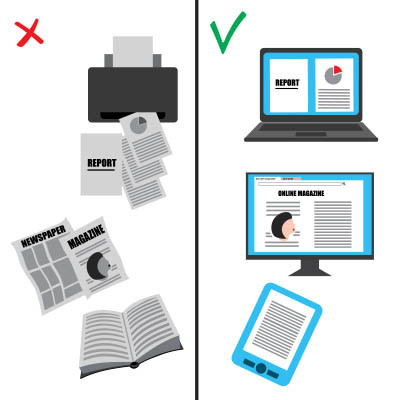
In nearly every office, the printer hums along in the background, so familiar that nobody questions it. Worth questioning, though. The average office worker goes through roughly 10,000 sheets of paper a year, a figure cited by the EPA and repeated across plenty of studies. That is real money, real clutter, and a real environmental cost. And much of it is waste: research has found nearly half of printed documents are tossed within a day. Cutting it down is not just about saving trees, it is about working smarter. Here are three ways to do it.
Move the Work Off Paper
Most of what gets printed never needed to be. Reviewing a document, sharing a draft, signing a form, collaborating on a file, all of it can happen on screen now, often better than on paper. Shared documents let several people work on the same file at once instead of printing copies for everyone. Digital signatures handle contracts without a single sheet. The less your workflow depends on paper, the faster and cheaper it gets, and the easier it is to find things later.
Build Better Printing Habits
Some printing is unavoidable, so make what remains intentional. Before anyone hits print, the question is simple: do I actually need this on paper? A lot of printing is reflex, not need. Encourage people to read on screen, print double-sided, and skip the cover pages and full-color graphics nobody asked for. Small habit changes across a whole team add up to a noticeably smaller stack and a smaller bill.
Make the Smart Choice the Default
The most reliable way to change behavior is to not rely on behavior. Set printers to double-sided and black-and-white by default, so the wasteful option takes extra effort instead of the other way around. Set up scanning that drops documents straight into your shared system so paper does not pile up in the first place. When the efficient choice is the automatic one, savings happen without anyone having to think about it.
Less Paper, Smoother Work
Cutting printing is one of those rare wins that saves money, reduces clutter, helps the environment, and makes your team faster all at once. It just takes the right setup and a few habits. The payoff shows up every month on the supply budget and every day in how easily people find what they need.
Helping businesses build smarter, faster workflows out of the tools they already have is a lot of what we do. If your office runs on more paper than it should and you want to fix that without disrupting how people work, we can help.

Growing a business means making smart calls, and buying technology is one of the trickiest. You need capable tools to compete and grow, but you also have a budget to respect. Spend too little and you hamstring your team. Spend too much and you have paid for features nobody touches. Here is how to find the sweet spot where your technology truly supports your goals without wasting money.
Start With What You Actually Need
Before you look at a single product, get clear on the problem you are solving. What does this technology actually have to do for your business? It is easy to get dazzled by features and end up buying a tool built for a company twice your size. Pin down your real requirements first, and you have a yardstick to measure every option against.
Prioritize by Impact
Not every tech investment moves the needle the same amount. Some directly drive revenue or remove a major bottleneck. Others are nice to have. Put your money where the impact is biggest first. Spending on the thing that unblocks your whole team beats spreading the budget thin across upgrades nobody asked for.
Buy Something That Can Grow
The tool that fits you today should not break the moment you get bigger. Look for options that scale, that can add users, locations, or capacity without forcing a painful rip-and-replace in two years. Buying for where you are headed, not just where you are, saves you from paying for the same project twice.
Fit-for-Purpose Beats Feature-Packed
The most expensive, feature-loaded option is rarely the smartest buy. A well-chosen tool that does the core job well can cover most of your needs at a fraction of the cost of the deluxe version. Do not pay for a long list of capabilities you will never use. Match the tool to the job, not to the brochure.
Count the Total Cost, Not Just the Price Tag
The purchase price is only the start. The real cost includes setup, training, maintenance, support, and what it takes to keep the thing running over its whole life. A cheaper option that is a nightmare to maintain can easily cost more in the long run than a pricier one that just works. Always weigh the total cost of ownership before you decide.
Finding that balance between capability and cost is exactly the kind of decision we help businesses make every day, with advice grounded in what actually serves your goals rather than what is easiest to sell. If you are weighing a technology investment and want a straight answer on what is worth it, we are happy to help.

Technology matters for any business, but for a smaller one, keeping pace is no longer just a smart move. It is becoming a matter of survival. Customers expect more, faster, and the competition is happy to meet that expectation. Fall behind on the tools your business runs on and the gap between you and the businesses that did not keeps widening, often before you even feel it.
Why Not Just Stick With What Works?
It is a fair question. If your systems are not broken, why touch them? Because technology is not only about fixing what is broken. It is about seizing opportunities and reducing risks you may not see yet. The setup that works fine today can quietly become the thing slowing you down tomorrow, while a competitor who modernized is serving customers faster and cheaper. Staying still feels safe. In a moving market, it is not.
Keeping Current Without Chasing Every Shiny Thing
This does not mean buying every new gadget or ripping out everything that still works. Plenty of proven systems have years of good life left, and chasing trends for their own sake wastes money. The goal is deliberate: keep the capabilities your business depends on current, retire what has genuinely aged out, and make the on-prem, cloud, or hybrid calls on purpose rather than by neglect. Modern does not mean newest. It means fit for what you need to do now and where you are headed.
The Challenge Is Real, and So Is the Fix
Most owners know they should be keeping up. The hard part is finding the time and knowing where to focus, while already running the business. That is exactly the gap a good IT partner fills: someone watching how the technology landscape is shifting, flagging what actually matters for your business, and handling the work so you can stay focused on the customers in front of you.
Stay Ahead, Not Behind
The businesses that treat technology as an afterthought tend to be the ones playing catch-up. The ones that keep it current, deliberately and without overspending, are the ones setting the pace. Which side of that you land on is largely a choice.
Helping businesses stay current and competitive without wasting money on hype is a core part of what we do. We keep the systems sharp, retire what is holding you back, and make the upgrade calls with your goals in mind. If you suspect your technology is quietly costing you ground, we can help you get ahead of it.
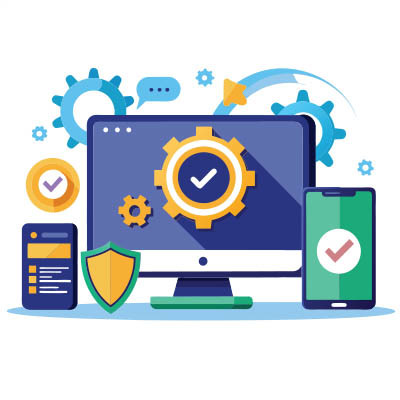
The gap between businesses running on current technology and those clinging to old systems that once served them well can be stark. And it is not only about avoiding the slow decline of outdated tools. It is about what you actively gain when your technology is current. Staying up to date is less about keeping up and more about unlocking what your business can do. Here is the real upside.
More Gets Done, Together
Modern tools clear the friction out of the workday. They take over repetitive tasks, speed up the work that used to drag, and let your team collaborate easily whether everyone is in the office or spread across locations. Shared cloud platforms and good project software mean fewer bottlenecks and less time lost to clunky processes. The result is simple: your people spend more of their day on work that matters and less on fighting the tools.
Stronger Security
Current technology is safer technology. Modern systems get security updates, support today's protections, and stand up to threats that did not exist when older tools were built. Staying current is one of the most effective things you can do to keep attackers out, because the alternative, running software past its support date, leaves known holes wide open. Up to date is not just faster. It is far harder to break into.
Better Service for Your Customers
Your technology shapes what your customers experience, even when they never see it. Faster systems mean quicker responses, fewer errors, and smoother transactions. The right tools help you understand what customers need and deliver it without the delays and hiccups that send people to a competitor. In a lot of markets, the quality of that experience is the whole ballgame.
Room to Grow and Adapt
Current technology gives you agility. When an opportunity appears or the market shifts, a modern, flexible setup lets you move on it. An aging one holds you in place, forcing you to say no to things you could otherwise do. Keeping your tech current keeps your options open, which is worth a great deal when conditions change faster every year.
Progress on Purpose
None of this means chasing every new release or replacing things that still work well. It means keeping the capabilities your business runs on current, deliberately, so you capture the upside without wasting money on hype. Done right, modern technology is not a cost. It is one of the better investments you can make in the business.
Helping organizations use technology to seize opportunities, not just solve problems, is exactly what we do. We keep your systems current, secure, and matched to where you are going. If you want your technology working for your growth instead of against it, we can help.

Technology runs through almost everything your business does, from working on projects to dealing with clients. How your people handle that technology shapes how secure and efficient the whole company is. The good news is that most of security comes down to a few simple habits, and anyone can build them. Here are four every employee should make part of the workday.
Protect Your Digital Keys
Your passwords are the keys to your accounts, and to the company's. A weak or reused password is the front door left unlocked. The habit is straightforward: use strong, unique passwords for every account, lean on a password manager so that is actually doable, and turn on multifactor authentication wherever it is offered. That extra step means a stolen password alone is not enough to get in.
Stay Alert for Deception
Most attacks start by tricking a person, not by breaking a system. A convincing fake email, a text pretending to be the boss, a call that is not really the bank. The habit here is a healthy pause. Before clicking a link, opening an attachment, or acting on an urgent request, especially one involving money or data, stop and verify it is real. Slowing down for two seconds defeats a huge share of attacks.
Keep Software Current and Approved
Those update reminders are not just nagging. They often carry security fixes for holes attackers already know about. The habit is to install updates promptly instead of dismissing them, and to stick to software the company has approved. Random downloads and unapproved apps are a common way trouble gets onto a network.
Handle Information With Care
Be thoughtful about company and customer data. Do not send sensitive information over unsecured channels, do not leave it visible on an unattended screen, and only share it with people who actually need it. Treating data like it matters, because it does, prevents the quiet leaks that cause real damage.
Small Habits, Big Protection
None of these takes special skill. They take consistency. When every person on the team builds these four habits, your business gets dramatically harder to attack, because the most common ways in are already closed. Security is a team sport, and your people are the first line.
We help businesses turn these habits into second nature with training and the right tools behind them, as part of managed cybersecurity. If you want your whole team pulling in the same direction on security, book a call and we will help you build it.

© 2026 CybertronIT. All rights reserved.Privacy Policy · Sitemap