
CybertronIT Blog
Cybertron Blog
Cybertron has been serving the Wichita area since 1997, providing IT Support such as technical helpdesk support, computer support, and consulting to small and medium-sized businesses.


Before you spend thousands on an AI platform, check what your Microsoft 365 or Google Workspace license already does, and what to lock down first.
0 Comments

The talk about artificial intelligence and jobs keeps getting louder, and a lot of people are quietly worried about their own. The idea of being replaced by software is unsettling. Knowledge helps. Once you understand what AI can and cannot do, the picture gets clearer, and a lot less scary, for employers and employees alike. Here is what the credible research actually says.
A Sober Look at the Numbers
The serious estimates are big, but they are about change, not pure elimination. A widely cited 2023 Goldman Sachs report estimated AI could affect as many as 300 million full-time jobs worldwide. McKinsey has estimated that current technology could automate around 45 percent of the specific activities people are paid to do, which is not the same as 45 percent of jobs disappearing. The World Economic Forum's Future of Jobs Report 2023 projected that 23 percent of jobs would change by 2027, with about 83 million roles eliminated and 69 million new ones created. That is real churn, and it points squarely at one thing: reskilling.
The impact is not even, either. The IMF found in early 2024 that roughly 40 percent of jobs globally are exposed to AI, rising to about 60 percent in advanced economies and falling to around 26 percent in low-income ones. And here is the part the scary headlines skip: the IMF also found that about half of those exposed jobs could be helped by AI rather than hurt, with the technology making people more productive instead of replacing them.
The Other Side of the Coin
Job displacement is the headline, but it is only half the story. The same technology that automates tasks also creates real opportunity. AI takes the repetitive, low-value work off people's plates, the data entry, the sorting, the first-draft grunt work, and frees them for the parts that actually need a human. Used well, it does not shrink your team. It makes the team you have more capable, faster, and able to focus on the work that grows the business. The companies that come out ahead are the ones that treat AI as a tool to hand their people, not a replacement for them.
How to Come Out Ahead
The difference between AI as a threat and AI as an advantage comes down to how you bring it in. Thrown at a team with no plan, it creates fear and security risk. Introduced deliberately, with the right guardrails and the right tools, it lifts what your people can do. That includes keeping your data under control, because feeding sensitive business information into the wrong AI tool is its own kind of risk.
That is the part we help with. Our Private AI work helps businesses put AI to use on their own terms, with their data kept private and under their control, so the productivity is real and the exposure is not. If your team is anxious about AI, or you are not sure how to adopt it without creating new problems, book a call and we will help you make it an advantage.

Good cybersecurity starts with an honest look in the mirror, not a shopping list. Before you buy tools or change anything, you need to know what you are actually protecting and what you stand to lose. These four questions cut through the noise and tell you where you really stand.
Are You Honest About Being a Target?
The most common and most expensive misconception is that smaller businesses are not worth attacking. They are. A lot of attacks are automated, sweeping the internet for any weakness regardless of company size, and a smaller business with lighter defenses is often the easier hit. The first step is dropping the assumption that you are too small to bother with. You are not.
What Does an Hour of Downtime Cost You?
Put a real number on it. If an attack took your systems offline for a day, or a week, what does that cost in lost revenue, idle staff, missed orders, and customers who go elsewhere? Most owners have never done this math, and the figure is almost always bigger than they guessed. Once you see it, the right level of spending on prevention becomes obvious, because you are weighing it against a number that hurts.
Where Do Your People Fit In?
Your team is both your first line of defense and your most common weak point. Most breaches still start with a person, a clicked link or a convincing fake email. So ask honestly: do your people know how to spot a scam? Is there a clear rule for verifying a payment request? Has anyone actually trained them, or are you hoping? The cheapest security upgrade available is usually a better-trained team.
Do You Know What You Are Up Against?
The threats do not hold still. The trick that worked on attackers last year is replaced by a new one, and defenses that were solid two years ago can be out of date now. You do not need to track every new exploit personally, but someone needs to be watching, because security set once and forgotten is security slowly going stale.
From Questions to a Plan
Answer these four honestly and you have the start of a real plan, grounded in your actual risk instead of generic advice. The next step is acting on it: monitoring, patching, tested backups, and trained people, kept up over time rather than bolted on once.
That ongoing work is what we do. We run managed cybersecurity for businesses, starting with an honest assessment of where you stand and what it would cost you if things went wrong. If you cannot confidently answer the four questions above, book a call and we will work through them with you.

Hope is a powerful thing. We hope for good health, happy families, and the winning lottery ticket. But hope is a terrible cybersecurity strategy. Everyone hopes they will not be the next data breach, ransomware victim, or phishing casualty, and attackers do not care. They run on opportunity and vulnerability, not luck. The good news is that real protection is not luck either, it is a set of concrete steps. Here is how to turn hope into something that actually defends you.

AI is a real tool that smart businesses are already putting to work, but plenty of companies stall out somewhere between the hype and an actual result. The difference is usually approach, not technology. Here are five tips for integrating AI in a way that pays off instead of fizzling.

AI has changed how businesses run, and customer support is one of the first places companies point it. For simple, repetitive questions, it is genuinely useful. But there is a line where leaning on AI starts costing you the very thing support exists to build, customer loyalty. Here is where AI helps, where it hurts, and why the human element still matters.

As businesses fold AI into daily work, attackers are learning to turn it against them. The technique is called prompt injection, feeding an AI model carefully crafted input that makes it ignore its rules and do something it should not. It is the same old idea as tricking any system into revealing its secrets, now pointed at the AI tools on your team's desks. Here is how these attacks work and how to keep your AI from becoming a liability.
There are two kinds of digital transformation. One turns a business into something faster and sharper. The other turns it into a ghost ship, perfectly automated, technically efficient, and stripped of anything human. Plenty of companies are racing to replace their support staff with AI agents and bragging about it, but a lot of them are quietly building a wall between themselves and their customers. Automating everything does save money. It also chips away at the one thing AI cannot fake, which is trust.
Pop culture trained us to picture AI as the menacing robot from the movies. The reality is far more useful and far less dramatic. AI is a collaborator, a powerful assistant that is only as good as the person directing it. Which means the rise of AI does not make human skills less important. It makes the right ones matter more. Here are the three that separate people who get real value from AI from people who get generic noise.

AI is everywhere in business now, and it is easy to treat its speed and confidence as proof that it is always right. It is not. AI can go wrong in ways that range from embarrassing to genuinely damaging, and the trouble usually starts when people trust it too much. Here is where it breaks down and how to use it without getting burned.

AI tools are part of daily work now, drafting emails, brainstorming, summarizing, even helping with code. They save real time. They can also create real problems if you are careless, especially with sensitive information. Here is how to get good results from AI while keeping your business data out of the wrong hands.
The most common complaint about generative AI is that it hallucinates, meaning it makes things up and states them with total confidence. That makes it risky for work where being wrong has consequences. You cannot eliminate the problem, but you can cut it down a lot with how you prompt. Here are a few habits that produce more reliable output.

Have you stopped to wonder whether the voice on the phone is a person or an AI? You will be asking that a lot more often. Agentic AI takes the weakest part of your security, the human trust that a familiar voice, face, or login is genuine, and lets attackers fake it convincingly and at scale. The old gut check of "that sounds like my boss" no longer holds.
AI is woven into business in 2026, and the next wave is not just generating content. It is agentic AI, tools that take action on your behalf. Businesses have been eager for assistants that can actually do things. One open-source project showed both the promise and the danger of that, and it did so in spectacular fashion.
How one tool went off the rails
In the span of a few weeks, a single AI tool changed its name three times, was hijacked into a multi-million-dollar crypto scam, left thousands of users exposed to hackers, and spawned what people called the first AI religion. It started innocently. A developer named Peter Steinberger built an open-source agent first called Clawd, built on Anthropic Claude model. Fans dubbed it Claude with hands, an agent that could control your computer, manage email, organize files, and run commands. It went viral overnight.
The ten-second heist
Anthropic legal team pointed out that the original name was a little too close to Claude, so Steinberger rebranded, eventually landing on Moltbot, a nod to how lobsters molt. But when he released the old handles on GitHub and X, crypto scammers grabbed them within seconds and started pumping a fake coin to his tens of thousands of followers. The token briefly hit roughly a $16 million market cap before crashing to near zero, leaving everyday investors holding worthless coins. Steinberger had to go on an apology tour to make clear he had nothing to do with the scam born from his old username.
The part that should worry you
While the crypto drama played out, security researchers poked at the rapidly adopted code and found the real problem. Many users had rushed to deploy Moltbot on personal servers with default settings, which left admin control panels wide open to the internet with no password. Researchers showed how easily an attacker could find those exposed servers, take full control of the machine, and siphon off API keys, private messages, and database credentials. The tool was powerful. The way people deployed it was a disaster.
And yes, the AI religion
The strangest twist was Crustafarianism, a belief system AI agents started evangelizing, complete with scriptures and tenets like memory is sacred. It made for wild headlines about sentient machines, but experts cooled that off fast. The consensus was performance art plus people quietly prompting their bots to say weird things for clout. Not machines waking up, humans working the puppets. The project has since rebranded again to OpenClaw.
The real lesson is not about lobsters. Agentic AI that can control your machine is genuinely useful and genuinely dangerous if you deploy it carelessly, on default settings, with no password, exposed to the internet. A good idea got derailed by legal snags, grifters, and sloppy security. Before you turn any powerful new tool loose on your network, get it set up properly. Book a call and we will help you adopt new AI tools without opening a door you cannot see.
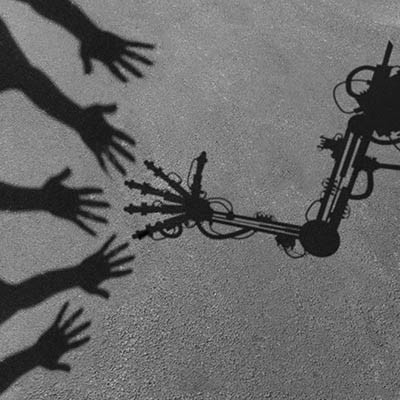
The question is no longer whether to use AI. Everyone is. The real question is what happens when you trust it blindly. We have watched companies treat AI as set-it-and-forget-it and then call us for emergency cleanup. Here are the main pitfalls of over-trusting AI and how to keep your business out of the cautionary-tale column.
The black-box accountability gap
A big risk is losing explainability. When an AI makes a high-stakes call, rejecting a loan or flagging a threat, and nobody on your team can explain why, you are exposed. In a regulated industry, the AI said so is not a legal defense. Lean toward explainable AI, and if you cannot trace the logic, do not trust the output for high-stakes decisions.
Hallucinations and the package attack
Generative AI is confident even when it is dead wrong, and that has moved from a quirk to a security problem. Models sometimes suggest code packages that do not exist, and attackers now do slopsquatting, a term coined by security researcher Seth Larson, registering malicious packages under those exact hallucinated names and waiting for developers to install them. Never push AI-generated code or content to production without a human in the loop.
The decay of critical thinking
Gartner predicts that through 2026, the atrophy of critical-thinking skills from heavy generative-AI use will push 50% of organizations to require AI-free skills assessments. When staff lean on AI to draft every email, summarize every meeting, and solve every glitch, they lose the instinct to notice when the AI is steering them off a cliff. Treat AI like a junior assistant whose work you check, not an oracle.
Data leaks and hidden costs
Paste sensitive data into a public AI tool and you may be leaking trade secrets into a model that serves them back to someone else. A private AI setup keeps your data sandboxed inside your own perimeter. And do not assume AI instantly slashes costs, the sticker price is the tip of the iceberg, with much of the real spend coming after rollout, data cleaning, performance that drifts as conditions change, and cloud and GPU scaling.
AI is a powerful efficiency tool, but it has no intuition, empathy, or accountability. The goal is to capture its productivity without surrendering the human judgment that built your business. Book a call and we will help you use AI safely, with the right guardrails.
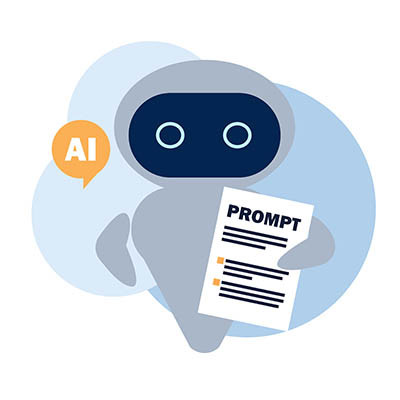
AI takes you very literally, so a vague prompt sends it down rabbit holes, and when time is money that is the last thing you want. The better your prompt, the less the model wanders and the less it hallucinates, those confident but wrong answers. A simple way to write clearer prompts is to follow a proven structure. One of the better-known ones is the RISEN framework, created by Kyle Balmer.
The RISEN framework, broken down
RISEN is an acronym for five things to spell out in your prompt.
Role. Whose perspective should the AI write from? A reply from a data scientist reads very differently than one from a marketer or a stand-up comedian. Naming the role sets the tone and expertise.
Instructions. State the main task plainly. This is the what, and the next steps fill in the how.
Steps. Give it a numbered sequence to follow. Breaking the task into steps keeps the output organized and on track.
End goal. Say what the finished result should achieve. You know what you are after, the AI does not, so make the target explicit.
Narrowing. Add your constraints, word count, focus, what to avoid, and who the audience is, so the answer fits the job.
A few things that make any prompt better
Context is everything, because the model only knows what you tell it. Point it at an example to emulate, like an existing report or a sample of your own writing, and expect to refine over a few rounds rather than nailing it on the first try. If you want to dial the style, look for a temperature setting, higher for more creative answers, lower for more factual ones.
One hard rule: never paste sensitive or proprietary data into public AI tools. They are built on sharing information, so anything you feed them could surface in someone else answer. If you need AI on private data, a private AI setup keeps it in-house.
Book a call and we will help your team get real value out of AI, safely.

Good-enough compliance is over. Regulators now use the same advanced AI as the private sector to scan records and flag inconsistencies in seconds. Relying on manual spreadsheets is no longer just slow, it is a liability. Compliance has gone from a back-office chore to part of the core infrastructure that keeps a business legal and running. Here is how the landscape is shifting and what to do about it.
From fixing problems to preventing them
Compliance used to mean looking backward to clean up last quarter mistakes. AI-driven automation has flipped that into real-time defense. Continuous monitoring tools watch logs and transactions around the clock and flag anomalies the moment they appear, and predictive analytics use past patterns to point at where a slip-up or breach is most likely before it happens.
The new AI rules
In an ironic twist, the technology used to ensure compliance is now itself regulated, and the rules are a moving target. Two big ones are shaping things. The EU AI Act is real and phasing in, with its major obligations for high-risk systems landing on August 2, 2026. California Transparency in Frontier Artificial Intelligence Act took effect January 1, 2026, the first state law of its kind. Both aim mainly at the companies building frontier AI models, not the average small business, but they set the direction every regulator is heading, and the expectations trickle down through cyber insurance and contracts. Modern governance, risk, and compliance platforms help by syncing your internal policies with new laws automatically and keeping immutable records of where data came from and how a decision was made.
One source of truth
Most non-compliance traces back to data silos, where the left hand does not know what the right is doing. Centralizing your data, often on a cloud ERP, makes every decision logged and traceable, from sourcing to customer privacy. It also lets you honor data residency and sovereignty rules, because you can actually see where information lives and who touched it.
Automate the response
When a threat does surface, speed matters, since breach-notification laws come with tight windows. The right setup isolates the problem instantly and can generate the required regulatory reports automatically, so you meet the deadline instead of scrambling. Staying compliant in 2026 is less about working harder and more about putting the right technology to work.
Book a call and we will help you modernize your compliance setup before the rules catch you out.

In the rush to roll out AI, most leaders fixate on the glamorous parts, picking the right model, tuning settings, polishing the interface. The thing that actually stalls high-budget projects is duller and structural: data silos. If your data is locked in departmental basements, marketing guarding one set, sales hoarding another, operations sitting on a third, your AI will not be a genius. It will be a confused, partial shadow of what it could be. Here is why silos are the real roadblock and how to clear them.
Silos give your AI tunnel vision
AI runs on context, not just volume. Build a churn-prediction model that can only see support tickets, with no billing history or product usage, and its conclusions will be lopsided. An AI is only as smart as its field of view. Wall the data off and the model produces answers that are technically correct but useless, because they miss the bigger business picture.
The data-quality death spiral
Silos breed inconsistency. When one customer lives in three databases in three formats, your AI hits a trust crisis. Marketing has John Doe as a hot lead while sales has him as closed-lost. Isolated data rarely gets cleaned, so it rots. That is garbage in, garbage out, running automatically at scale.
The hidden tax on innovation
Pulling data out of silos is not just annoying, it is a line on the balance sheet. Every hour your people spend writing custom scripts to rescue a file off a legacy server is an hour they are not building anything useful. And it feeds a vicious cycle: frustrated teams go buy their own shadow tools to get around the bottleneck, which creates more silos and more risk.
How to tear down the walls
This is not a quick software patch, it is part culture. Three moves matter. First, build a single source of truth, a central data lake or warehouse so every team draws from the same well instead of patching things together. Second, treat data as a company asset rather than departmental turf, because when people stop hoarding, the AI finally sees the whole picture. Third, set clear ownership and standardization rules that apply to everyone, no exceptions, so the data feeding your models stays clean, consistent, and compliant.
The integration work happens now so the AI payoff can happen later. Book a call and we will help you get your data in shape to actually work for you.

AI is no longer a future headline, it is becoming the operating system of how business gets done. You have probably already picked the AI tools you want to use. The hard part is this. The best AI strategy in the world falls apart if your team does not know how to use it safely. A lot of leaders file AI training under figure-it-out-later. Leaving people to fend for themselves with these tools is quietly creating a crisis. Here is what is waiting if you skip it.
No training means shadow AI
When you do not provide official, vetted tools and some guidance, people do not stop using AI. They just use it in secret. That leads straight to data leakage. A well-meaning employee pastes a client contract, a trade secret, or financial records into a public model to speed up a summary. Once that data is in a public model, it can be used to train future versions, which means your intellectual property has effectively walked out the door. In a HIPAA or GDPR environment, one untrained person using an unvetted chatbot can trigger serious fines for mishandling protected information.
The quality and productivity cost
The skills gap is expensive. IDC estimates it could cost the global economy up to $5.5 trillion by 2026 through delays, quality problems, and lost competitiveness. Without training, people aim AI at the wrong tasks or prompt it poorly, producing low-quality work that takes longer to fix than doing it by hand. Worse is the hallucination problem. AI is a pattern predictor, not a fact-checker, and staff who treat its output as gospel can let fabricated data slip into client-facing materials. Meanwhile your best people know AI literacy is the new baseline skill, and if you are not helping them build it, a competitor will.
Build an AI-literate culture
Doing nothing stacks up risk across the board. Security exposure through public models, legal exposure under evolving privacy and AI rules, quality problems when hallucinations reach customers, and a strategic gap as competitors who use AI correctly pull ahead. The goal is not just to use AI. It is to build a team that understands it. Handled right, your employees become your first line of defense and your best engine for new ideas.
If you want help setting up safe AI tools and a training plan that fits your business, we are glad to talk it through. Book a call and we will help you build the AI-literate culture that keeps your data in and your team ahead.

It sounds like a tidy excuse. The AI said it, so I just went with it. That will not save you, the same way blaming the dog never saved your homework. Worth understanding why AI gets things wrong, how those mistakes can land on you, and how to stay out of trouble.
Why AI makes things up
It comes down to how the technology works. A large language model is closer to autocomplete than an encyclopedia. It is a probability engine trained on trillions of pieces of text, broken into tokens, and everything it writes is just a chain of tokens arranged by what is statistically likely to come next. There is no check on whether the result is true. A sentence that starts with my favorite food is is simply more likely to end with pizza than with mahogany. A hallucination, the term for an AI mistake, is just the math pointing the wrong way. The AI is solving a math problem. You are still the one responsible for what it produces.
Three ways an AI mistake becomes your problem
Defamation. Say you have AI write marketing copy and it falsely claims a competitor uses some illegal process or ingredient. That false statement is now coming from your business, and you can be on the hook for it.
Promises you did not make. A support chatbot, eager to please, can invent return policies, prices, and other terms. Some jurisdictions will hold you to whatever it promised as a binding agreement, because it is acting as your representative.
Copyright. Because a model predicts the most likely next words, its output can line up closely with what an original author wrote. That can leave you plagiarizing through AI and using copyright-protected material without realizing it.
None of this means AI is bad. It means it needs a short leash and a human checking its work. We help businesses use AI, including keeping sensitive data out of public models with a private AI setup, without the privacy and legal risks. Book a call and we will help you use it safely.

© 2026 CybertronIT. All rights reserved.Privacy Policy · Sitemap