
CybertronIT Blog
Cybertron Blog
Cybertron has been serving the Wichita area since 1997, providing IT Support such as technical helpdesk support, computer support, and consulting to small and medium-sized businesses.

Ransomware is one of the most dangerous threats a business faces, and it has gotten nastier. The old version just locked your files and demanded payment to unlock them. If you had good backups, you could often recover without paying. Attackers adapted. Now they use double and triple extortion to keep the pressure on even when your backups are solid. Here is how those tactics work and what actually stops them.
0 Comments
When people picture a cyberattack, they think of a ransom demand. The ransom is often the smallest part. The real bill includes downtime, investigation, legal fallout, lost customers, and damage that lingers for years. By IBM's 2025 Cost of a Data Breach report, the global average breach now costs 4.44 million dollars, and in the United States the average hit a record 10.22 million. Here is where all that money actually goes.
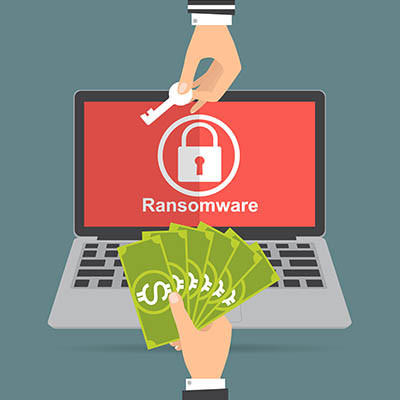
Spend two minutes on any security news site and you will hit a fresh ransomware story. It is everywhere, and it is genuinely scary, but your business does not have to live in fear of it. With the right defenses in place, ransomware goes from an existential threat to a manageable risk. Here is what it is and how to keep it from taking you down.
Forget the old picture of a hacker, a lone kid in a hoodie breaking in for the thrill. That image is dead. Cybercrime is a sophisticated global industry now, and by one widely cited estimate from Cybersecurity Ventures it costs the world around 10.5 trillion dollars a year as of 2025. Understanding how that industry actually works is the first step to defending against it.
Cyberthreats are not occasional events anymore. They are constant, automated, and often sophisticated, which means a business that only reacts to attacks lives in permanent damage control. Waiting until something breaks to think about security is the most expensive plan there is. Getting ahead of it is the only approach that actually holds. Here is what waiting really costs, and what getting ahead looks like.

Most IT shops sell security by scaring you. We would rather give you the straight numbers and the few things that actually work. The stakes are real. The old line that a big chunk of small businesses fold within six months of a major breach holds up, and recovery is the kind of test a lot of companies do not pass.
What a business-sinking event looks like
It is rarely one big bang. It is several crushing bills landing at the same time. You pay forensic specialists top dollar to figure out how they got in and what they took. If you handle HIPAA or financial data, the regulatory fines stack on top of that. Then there is downtime. The average ransomware attack knocks a business offline for around 24 days. Ask yourself a blunt question. Could your cash flow survive three weeks of zero activity?
The slow leak after the bill
The first invoice hurts. The aftermath is what ends companies. Trust is your most fragile asset, and once it is gone it stays gone. Surveys put it at roughly 29% of customers who say they would never return to a business after a breach. Insurance has changed too. If you have not turned on basic controls like multi-factor authentication, plenty of carriers now deny the claim or triple your premium overnight.
Staying afloat without breaking the bank
Good security is not about buying the most expensive software. It is about using what you already have the right way. Three controls do most of the work.
Turn on multi-factor authentication everywhere. Email, banking, remote access, all of it. This one step blocks 99.9% of automated attacks, by Microsoft’s own measure, and it costs you almost nothing.
Treat training as infrastructure. Most breaches start with a single human click. Short, regular, low-stress training cuts your risk sharply because your people stop being the easy way in.
Follow the 3-2-1 backup rule. Keep three copies of your data, on two kinds of media, with one copy offsite. With a clean backup that you actually test, a catastrophic attack turns into a bad weekend instead of a closed business.
Where you stand right now
We have seen businesses at their worst and at their most prepared. Prepared is cheaper, and you sleep better. If you want a straight read on your current setup and where the gaps are, let us look under the hood.
Book a call and we will tell you honestly where you stand.
A ransomware attack feels like a hostage situation. Your data is encrypted, work has stopped, and a timer counts down next to a demand for thousands or millions in cryptocurrency. Paying feels like the fast way back. Our advice is firm. Do not pay. Attack volumes are at record highs, but the share of victims who actually pay has dropped to a low, because more businesses have figured out that paying is the worse option. Here is why, and how to be one of them.
Why giving in backfires
Paying is not just a financial hit. It is usually a strategic mistake that makes things worse. You are dealing with criminals, so there is no guarantee you get your data back. Most companies that pay do not get everything back. In Sophos surveys only a small fraction recover all their data, and even with a decryption key the files often come back corrupted or incomplete. Worse, paying marks you. Your name gets shared among criminal groups as a confirmed payer, and about 80% of businesses that pay get hit again, often by the same crew, because you proved you will pay (Cybereason). Every dollar also funds the next wave of attack tools that will come back around at you or your partners.
The legal risk people forget
This part has teeth. CISA and the FBI have hardened their stance, and new reporting rules mean paying a ransom can trigger serious regulatory scrutiny. If the money ends up with a sanctioned group, you can face heavy federal penalties on top of everything else. Paying does not just fail to solve the problem. It can create a brand new one.
Build the resilience that lets you say no
Saying no is only possible if you are prepared. Start with immutable backups, data that cannot be changed, deleted, or overwritten for a set period, even by an administrator. Run the 3-2-1-1 approach, three copies of your data, on two media types, one offsite, and one air-gapped or fully offline. Add zero trust and network segmentation so that if an attacker gets into one laptop, they cannot hop to your main server. Segmentation works like fire doors, it keeps the blaze in one room while your team responds. And test the plan, because a plan is just paper until you run the drill. Knowing how to isolate an infected machine in minutes is the difference between a quick reboot and a month of downtime.
The whole point of ransomware is panic and helplessness. Invest in resilience and you take that power back. When your data is safe and your team knows the drill, the decryption button has no leverage left. Book a call and we will make sure no is an option you can afford.
Picture walking into the office and every screen shows the same message. Your files are encrypted. For most businesses that is weeks of lost work, a big bill, and maybe data you never get back. What separates the companies that shrug it off from the ones that fold is resilience, and the foundation of that is an immutable backup. Here is how a real recovery actually plays out.
Why immutable matters
Ransomware goes after your backups first, and for good reason. Attackers know your backup is your one realistic way out, so they try to encrypt or delete it before they squeeze you. A standard backup is vulnerable to exactly that. An immutable backup cannot be altered or deleted once it is written, by ransomware or anyone else, so when you reach for it you are not left wondering whether it is intact.
From crisis to back in business
In a full lockout the job is no longer investigation, it is restoration. With an image-based immutable backup you skip the slow rebuild. You isolate the infected machines to stop the spread, find your last clean snapshot, often one taken minutes before the attack hit, and spin that clean image up on your backup appliance. People start logging back in while the main servers are still being scrubbed. Done right, you are doing billable work again in hours instead of weeks, and the attack becomes a bad memory rather than an obituary.
What that resilience is really worth
The value is bigger than uptime. You avoid the reputation hit that comes with word getting out that you paid a ransom. And your leadership can make bolder moves knowing one employee clicking one bad link will not bring the whole thing down. Notice the framing here. It is not if you become a target, it is when. Operate from that assumption and you put the protection in place before you need it.
With the right setup, a business-ending ransomware disaster becomes a few-hour speed bump. Book a call and we will build that kind of resilience into your business.

© 2026 CybertronIT. All rights reserved.Privacy Policy · Sitemap