
CybertronIT Blog
Cybertron Blog
Cybertron has been serving the Wichita area since 1997, providing IT Support such as technical helpdesk support, computer support, and consulting to small and medium-sized businesses.


Picture a small business that just spent a fortune on the best security software and a top-tier firewall. Impressive, until someone walks in one night through an unlocked door and takes a hammer to the server sitting in plain sight. All that digital protection, undone by a physical gap. Cybersecurity is essential, but it does nothing to stop a crowbar. Here is the physical side that too many businesses skip.
0 Comments

While you are busy shoring up your cybersecurity, it is worth asking what you are doing about the physical side. The risk to your people, your data, and your equipment is real, and the line between physical security and IT has mostly disappeared. Cameras, badge readers, and door controllers all run on your network now, which means they are your problem too. Here is what a modern setup includes and how to handle it.
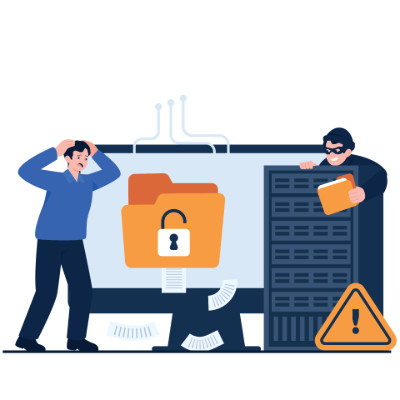
If you still treat IT as a secondary expense, you are probably overlooking the biggest threat to your profit. Your digital infrastructure is the plumbing of your revenue. It is either a vault protecting what you earn or a sieve quietly draining your margins. The real point is simple: cybersecurity is not a tech problem stuck in a back office, it is a direct pillar of your financial stability.
Look at it like a thief would
Standard IT companies promise safety, but that is abstract when you are trying to make payroll on Friday. A more useful lens is to ask where your money is actually exposed and what a specific weakness would cost you. Look at your business the way a thief does and one thing becomes clear: lazy habits are usually more dangerous than master hackers. The question is not just how good the lock is, it is how fast you can recover after the door gets kicked in.
The habits that stop the bleeding
Security is less about buying the right software and more about disciplined behavior. Start with a second-channel rule. No wire transfer or change to banking details, especially anything sizable, gets approved on email alone. A quick call to a known number to confirm the request stops most fraud cold. Move your team from passwords to passphrases, which are easier to remember and harder to crack. And treat a stray USB drive found in the parking lot, or an unlocked server closet, as the threat it is.
How the con actually works
Attackers rarely blast their way in. They exploit what you could call the nice-guy tax, weaponizing your employees natural urge to be helpful. The cycle is predictable. They research your company on social media, then send a message that mimics the boss tone and manufactures urgency, then ask for a small favor like checking an invoice. Once someone clicks, they vanish with the money before anyone notices. That is why small businesses are often better targets than banks, no billion-dollar defenses, plenty of helpful staff who do not want to tell the boss no.
What is actually at stake
Ignore these leaks and you risk the foundation of the company. Beyond the immediate loss, there is reputational damage and the very real possibility of sitting idle for weeks while systems are painstakingly restored.
Do not wait for a financial gut-punch to notice the bucket is leaking. Book a call and we will translate your security from jargon into real-world protection.

© 2026 CybertronIT. All rights reserved.Privacy Policy · Sitemap